


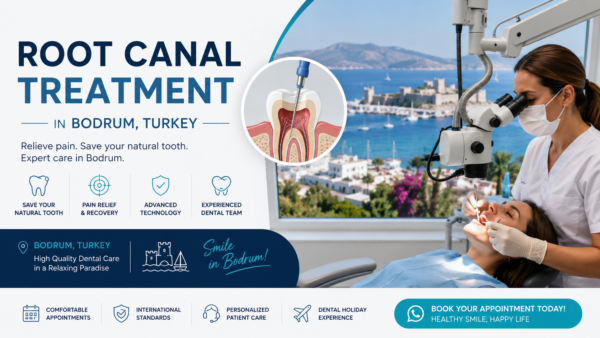

ROOT CANAL TREATMENT IN BODRUM, TURKEY: WHAT TO EXPECT +905525324848
A toothache that will not settle, sensitivity that lingers long after a hot or cold drink, or a small pimple on the gum that keeps coming back, these are the kinds of symptoms that usually mean the nerve inside a tooth is infected. Root canal treatment, also called endodontic treatment, is the procedure that saves the tooth rather than removing it. For patients already in Bodrum, or those planning a dental trip here, this guide explains exactly what root canal treatment involves, what it costs compared to home, and how to know if a clinic is doing it properly.
WHAT IS ROOT CANAL TREATMENT
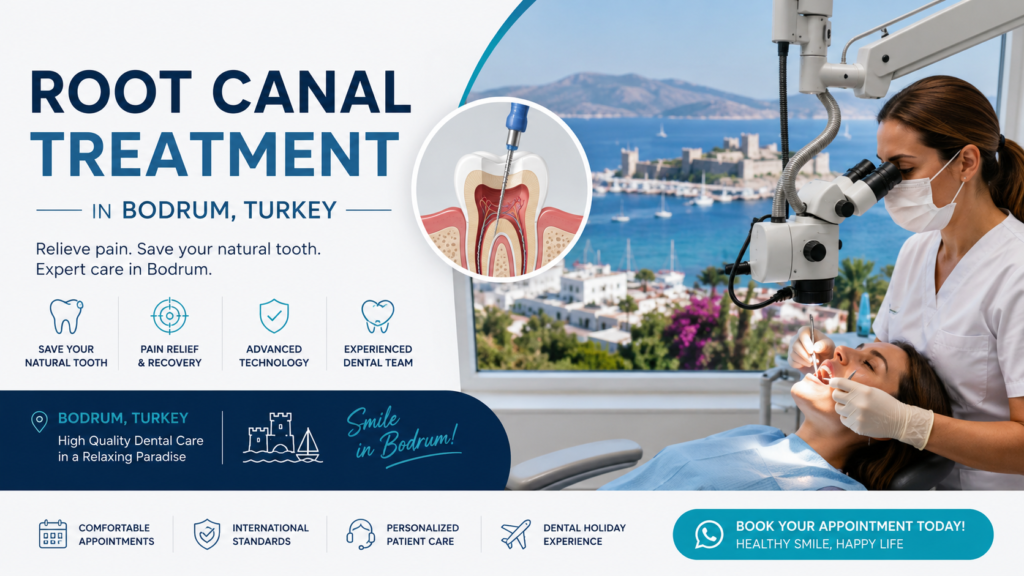
Inside every tooth, beneath the enamel and dentin, sits the pulp, a soft tissue containing nerves and blood vessels. When decay, a crack, or trauma allows bacteria to reach this pulp, it becomes infected and inflamed. Left untreated, the infection can spread to the bone around the root, causing an abscess and, eventually, tooth loss. Root canal treatment removes the infected pulp, cleans and shapes the canals inside the root, and seals them to prevent reinfection, allowing the natural tooth to stay in place and function normally.
SIGNS YOU MIGHT NEED A ROOT CANAL
Persistent throbbing pain, especially pain that worsens when biting down, is one of the clearest signals. Prolonged sensitivity to hot or cold that lingers well after the stimulus is removed is another. Other signs include a darkening tooth, swollen or tender gums near a specific tooth, and a small recurring bump on the gum that drains fluid. Not every toothache means the nerve is involved, which is why an accurate diagnosis with an X-ray always comes first.
HOW THE PROCEDURE WORKS
DIAGNOSIS AND X-RAY
The dentist takes a periapical or panoramic X-ray to confirm the extent of infection, the number of canals in the tooth, and whether the surrounding bone has been affected.
LOCAL ANESTHESIA
The area is numbed completely before any work begins. Root canal treatment has a reputation for being painful, but with modern anesthesia the procedure itself is no more uncomfortable than a filling.
REMOVING THE INFECTED PULP
A small opening is made in the top of the tooth to access the pulp chamber. The infected or dead tissue is removed using fine instruments, often with rotary technology that speeds up cleaning and improves precision.
CLEANING AND SHAPING THE CANALS
Each canal is cleaned, disinfected, and shaped to prepare it for filling. This step is the most technically demanding part of the procedure and is where an experienced endodontist makes the biggest difference to long-term success.
SEALING THE TOOTH
The cleaned canals are filled with a biocompatible material, most commonly gutta-percha, to seal out bacteria permanently. A temporary or permanent filling closes the access opening.
CROWN OR RESTORATION
Teeth that have had root canal treatment, particularly molars, are often more brittle afterward and benefit from a crown for long-term protection. This is usually fitted in a separate short appointment once the tooth has settled.
HOW LONG DOES IT TAKE
A straightforward single-canal root canal can often be completed in one visit lasting 45 to 60 minutes. Molars with multiple canals, or teeth with more complex infections, may need two visits spaced a few days apart, particularly if a temporary dressing is needed to fully clear an infection before the final seal.
IS IT PAINFUL
Under local anesthesia, patients typically feel pressure rather than pain during the procedure itself. Mild soreness for one to three days afterward is common and manageable with over-the-counter pain relief, similar to recovery from a routine filling.
ROOT CANAL COST IN BODRUM COMPARED TO THE UK AND US
Cost is the primary reason international patients search for root canal treatment in Turkey. In the UK, a molar root canal alone can run 400 to 800 pounds, before the cost of a crown. In the US, the same treatment frequently exceeds 1,000 to 1,500 dollars. In Bodrum and across Turkey more broadly, root canal treatment typically costs between 150 and 400 euros per tooth, with crown restoration adding a further 150 to 600 euros depending on the material chosen, meaning most patients save 60 to 80 percent even after factoring in travel.
WHAT AFFECTS THE PRICE
The number of canals in the tooth is the biggest factor, since a molar with three or four canals takes longer and requires more materials than a single-canal front tooth. Whether the infection has already caused an abscess, whether a crown is needed afterward, and whether the clinic uses a dental operating microscope for precision work also affect the final quote. Always ask for a written breakdown before treatment so there are no surprises.
RECOVERY AND AFTERCARE
Most patients return to normal eating within a day or two, though it is worth avoiding chewing directly on the treated tooth until any temporary filling is replaced or a crown is fitted. Mild tenderness when biting is normal for the first week as the surrounding tissue settles. Good long-term outcomes depend on completing the crown or permanent restoration promptly if one is recommended, since a treated tooth left without adequate protection is more prone to fracture.
SUCCESS RATES AND LONG-TERM OUTLOOK
Root canal treatment has a high success rate, generally cited around 90 to 95 percent, and a properly treated and restored tooth can last for decades, in many cases a lifetime. Failures are uncommon but can occur if canals are missed, if the seal breaks down over time, or if a new infection develops from a separate source such as a cracked filling.
ROOT CANAL VS EXTRACTION VS IMPLANT
When a tooth is badly infected, patients sometimes assume extraction is the simpler option, but keeping a natural tooth almost always preserves better long-term function and bone structure than removing it. Extraction followed later by an implant or bridge is typically more expensive and time-consuming than a root canal and crown completed in one trip. Root canal treatment is generally recommended whenever the tooth structure is salvageable.
WHY PATIENTS CHOOSE BODRUM FOR DENTAL TREATMENT
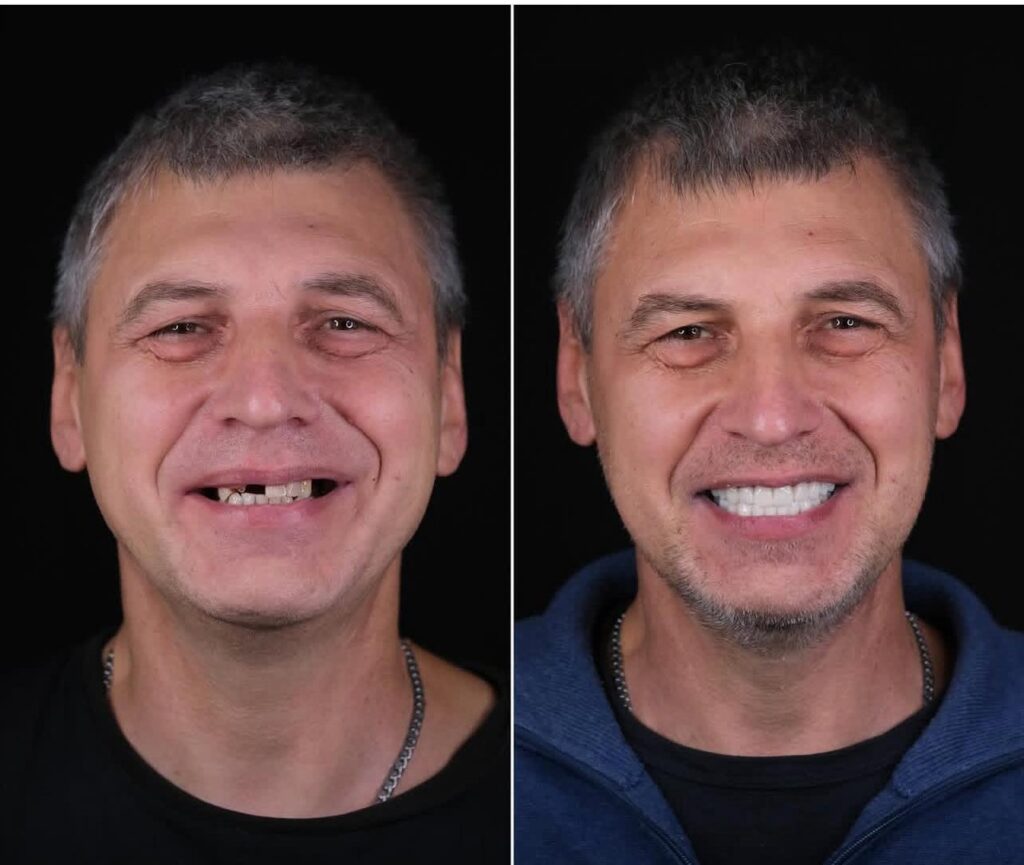
Beyond the cost savings, Bodrum offers modern dental clinics using the same rotary endodontic systems and imaging technology found in Western Europe, combined with a relaxed Aegean setting that makes a dental trip far less stressful than it sounds. English-speaking staff, coordinated airport transfers, and same-day or next-day appointments mean many patients can resolve a painful tooth and enjoy a short break in the same visit.
HOW TO CHOOSE A CLINIC FOR ROOT CANAL TREATMENT
Ask whether the treating dentist uses rotary instrumentation and digital X-rays, both of which improve accuracy and reduce treatment time. Confirm whether the quoted price includes the crown or restoration, since some quotes cover only the canal cleaning. A clinic that explains the diagnosis clearly, shows you the X-ray, and offers a written treatment plan before starting is a strong sign of a properly run practice.
FREQUENTLY ASKED QUESTIONS
HOW MUCH DOES A ROOT CANAL COST IN BODRUM, TURKEY
Root canal treatment in Bodrum typically costs between 150 and 400 euros per tooth, compared to 400 to 800 pounds or more in the UK for the same procedure.
DOES THE PRICE INCLUDE THE CROWN
Not always. Root canal cleaning and sealing is often quoted separately from crown restoration, which can add 150 to 600 euros depending on the material used, so always confirm what is included.
IS ROOT CANAL TREATMENT PAINFUL
The procedure is performed under local anesthesia and is not painful during treatment. Mild soreness for a few days afterward is normal and manageable with standard pain relief.
HOW LONG DOES A ROOT CANAL TAKE
A single-canal tooth can often be completed in one 45 to 60 minute visit. Molars with multiple canals or active infection may require two visits over a few days.
CAN I GET A ROOT CANAL AND CROWN IN ONE TRIP TO BODRUM
Yes, many clinics can complete both the root canal and a same-visit crown within a short stay, though complex cases may need a short gap between the two steps to allow the tooth to settle.
WHAT HAPPENS IF I IGNORE THE SYMPTOMS
An untreated infected tooth can develop into an abscess, which may spread to the surrounding bone and significantly increase the complexity and cost of treatment, sometimes leading to tooth loss.
IS A ROOT CANAL BETTER THAN REMOVING THE TOOTH
In most cases, yes. Keeping the natural tooth preserves bone structure and chewing function better than extraction, and is usually less expensive overall than extraction followed by an implant or bridge.
HOW LONG DOES A ROOT CANAL LAST
With proper restoration and normal oral hygiene, a treated tooth can last for decades, and in many cases for life.
DO I NEED TO SPEAK TURKISH TO GET TREATMENT IN BODRUM
No, most clinics serving international patients have English-speaking dentists and staff, and many also accommodate German and Russian-speaking patients.
WHAT SHOULD I DO IF I HAVE TOOTH PAIN WHILE ALREADY IN BODRUM
Contact a clinic directly for a same-day or next-day X-ray and assessment. Most urgent tooth pain cases can be diagnosed and, if needed, treated within 24 to 48 hours.
DO NOT LIVE WITH TOOTH PAIN
If a toothache has been building for days or weeks, it will not resolve on its own. Send a description of your symptoms, or a recent X-ray if you have one, for a free assessment and a clear price before you commit to treatment.