



Understanding Dental Tooth Numbering: A Complete Guide for Patients and Treatment Planning
When dentists prepare a treatment plan, they always refer to teeth using numbers instead of names. For many patients, this can be confusing. You may hear your dentist say “tooth 11 needs a crown” or “implant planned for 36” and wonder which tooth that actually is.
Why Dentists Use Tooth Numbers Instead of Names
Using tooth numbers allows dentists to:
- Avoid misunderstandings
- Plan complex treatments accurately
- Communicate clearly with laboratories, surgeons, and insurance providers
- Create internationally standardized records
- Planning
Instead of saying “upper right front tooth”, dentists simply say 11. This is faster, clearer, and universal.
The International Standard: FDI Tooth Numbering System
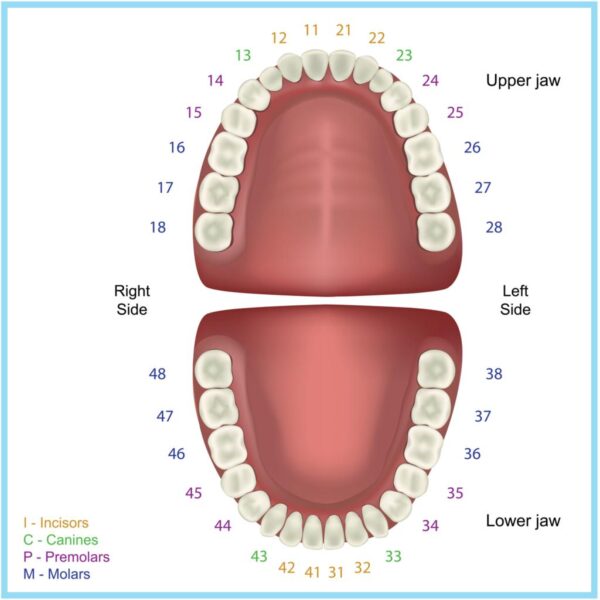
The chart above uses the FDI World Dental Federation system, which is the most widely used dental numbering system worldwide, especially in Europe, the UK, and medical tourism destinations.
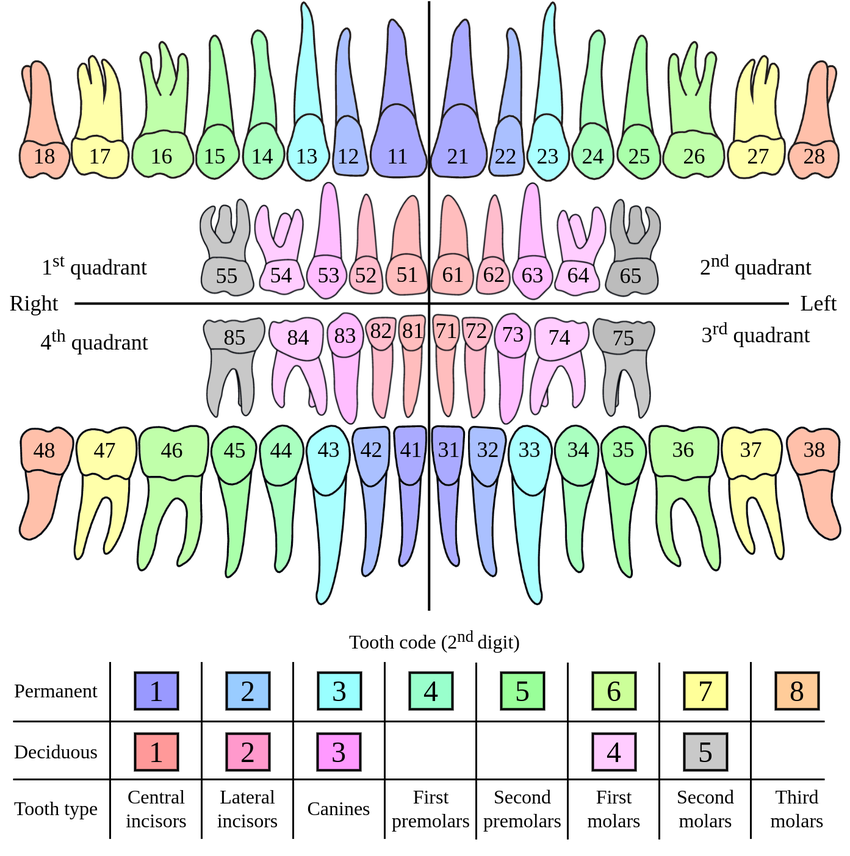
Each tooth has two digits:
First Digit – The Quadrant
This tells where the tooth is located.
Permanent Teeth:
- 1 = Upper Right Jaw
- 2 = Upper Left Jaw
- 3 = Lower Left Jaw
- 4 = Lower Right Jaw
(Right and left are always from the patient’s perspective)
Second Digit – The Tooth Position
This tells which tooth it is, counting from the middle to the back.
- 1 = Central Incisor
- 2 = Lateral Incisor
- 3 = Canine
- 4 = First Premolar
- 5 = Second Premolar
- 6 = First Molar
- 7 = Second Molar
- 8 = Third Molar (Wisdom Tooth)
How to Read the Upper Jaw (Maxilla)
Looking at the upper jaw in the diagram:
Upper Right Side (Quadrant 1)
- 11 – Upper right central incisor
- 12 – Upper right lateral incisor
- 13 – Upper right canine
- 14–15 – Upper right premolars
- 16–18 – Upper right molars
Upper Left Side (Quadrant 2)
- 21 – Upper left central incisor
- 22 – Upper left lateral incisor
- 23 – Upper left canine
- 24–25 – Upper left premolars
- 26–28 – Upper left molars
How to Read the Lower Jaw (Mandible)
Lower Left Side (Quadrant 3)
- 31–33 – Lower left front teeth
- 34–35 – Lower left premolars
- 36–38 – Lower left molars
Lower Right Side (Quadrant 4)
- 41–43 – Lower right front teeth
- 44–45 – Lower right premolars
- 46–48 – Lower right molars
Tooth Types Explained (Simple Guide)
Incisors (Front Teeth)
- Used for cutting food
- Numbers end in 1 or 2
- Most visible teeth when smiling
Canines
- Sharp teeth next to incisors
- Important for bite guidance
- Number ends in 3
Premolars
- Transitional chewing teeth
- Numbers 4 and 5
- Common for crowns and fillings
Molars
- Strong chewing teeth
- Numbers 6, 7, 8
- Often involved in implants or extractions
How This Helps You Understand Your Treatment Plan
When your dentist says:
- “Implant at 36” → Lower left first molar
- “Veneers on 11–21” → Upper front central incisors
- “Crown on 14” → Upper right first premolar
You can now visualize exactly where the treatment will be done.
This is especially important for:
- Implant planning
- Smile design
- Full-mouth rehabilitation
- Dental tourism cases
- Planning
Why International Patients Should Learn Tooth Numbers
If you are traveling for dental treatment, tooth numbering helps you:
- Understand written treatment plans
- Compare quotes accurately
- Communicate clearly with clinics
- Avoid confusion between languages
The FDI system ensures your records are understood anywhere in the world.
Frequently Asked Patient Questions
Is tooth numbering the same everywhere?
Not always. The FDI system is international, but the US uses a different method. Always confirm which system is used.
Does numbering change if a tooth is missing?
No. The number remains the same even if the tooth is extracted.
Are baby teeth numbered differently?
Yes. Baby teeth use quadrants 5–8, but adult treatment plans focus on permanent teeth.
Testimonials from International Patients
James Anderson – United Kingdom
Before my treatment, the dentist explained everything using tooth numbers. At first, I was confused, but this chart made it very clear. I understood exactly which teeth were getting crowns and implants. Having this knowledge gave me confidence and helped me trust the process. I strongly recommend patients learn basic tooth numbering before starting any dental work abroad.
Maria González – Spain
My treatment plan listed teeth like 11, 21, and 36. Thanks to this explanation, I could follow every step. It made communication so much easier and removed anxiety. Understanding the numbering helped me feel involved in my own dental journey rather than just a patient listening passively.
Thomas Müller – Germany
German dentists also use the FDI system, so seeing the same numbering abroad was reassuring. This guide explains it very clearly. Knowing which tooth is where helped me compare treatment options and understand X-rays and reports. Every international patient should read this before treatment.
Sophie Laurent – France
I always wondered what dentists meant by numbers. This guide explains it in a simple and logical way. When my dentist said “implant at 26,” I knew exactly where it was. That knowledge gave me peace of mind and made the entire process transparent.
Daniel Roberts – Australia
As a dental tourist, clarity was important to me. This tooth numbering guide helped me understand my treatment plan before traveling. It prevented misunderstandings and made discussions with the clinic much smoother. I felt informed, prepared, and confident.
Knowledge Empowers Patients
Understanding dental tooth numbering transforms you from a passive patient into an informed decision-maker. Whether you are planning implants, veneers, crowns, or full-mouth treatment, knowing which tooth is which gives you clarity, confidence, and control.
Keeping a tooth numbering chart available on your website is not only educational—it is essential for patient trust and transparency.
If you are planning dental treatment, save this guide and refer back to it whenever your dentist mentions a tooth number.